Recent posts with visuals

Showing posts with label salad. Show all posts

October 31, 2016

Celeriac remoulade

That big, brown, knobby, ugly vegetable known as celery root or celeriac is almost snowy white inside and makes a marvelous salad...
                        ~ Julia Child

It seemed to be a sort of monster, or symbol representing a monster, of a form which only a diseased fancy could conceive. If I say that my somewhat extravagant imagination yielded simultaneous pictures of an octopus, a dragon, and a human caricature, I shall not be unfaithful to the spirit of the thing. A pulpy, tentacled head surmounted a grotesque and scaly body with rudimentary wings; but it was the general outline of the whole which made it most shockingly frightful.... The cephalopod head was bent forward, so that the ends of the facial feelers brushed the backs of huge fore paws which clasped the croucher's elevated knees.
                        ~ Howard Phillips Lovecraft, The Call of Cthulhu


You many be forgiven for thinking, upon your first encounter with celeriac, that you have stumbled upon an excellent Halloween party decoration, instead of something delicious to eat. While there is inarguably something of an Old Great One's appearance to this homely vegetable, looking beneath the surface brings gastronomic rewards.


Contrary to what the name implies, celeriac - or celery root - is not the root portion of the ubiquitous celery stalk bundle, but rather its cousin. Beneath the pebbled and gnarled skin, the flesh is creamy white, with texture similar to that of a cabbage core (or kohlrabi, another underrated vegetable). The flavor is rather difficult to describe, although it is instantly recognizable once tasted - a woodsy, crunchy apple with a touch of parsley and subtle but distinct celery notes.

Celeriac is an incredibly flexible vegetable, delicious both cooked and raw. It can be simply roasted with olive oil, pepper and salt, or thinly sliced and baked into a gratin; it can be boiled and mashed, either alone or mixed with parsnips and potatoes, or pureed into a velvety soup; it can prepared as a salad. It is this last preparation that really highlights celeriac's distinct flavor.

Celery root remoulade is a very common and popular raw preparation in France. The usual mayonnaise dressing is lightened and made more tangy with the addition of crème fraîche, and an apple is incorporated for an unexpected burst of sweetness. For a more traditional remoulade, feel free to omit the apple.

When purchasing celeriac, look for a root that is firm and heavy for its size, and free from any soft spots or blemishes. Orange spots or yellowing on the cut root ends signal the celeriac may be past its prime. Larger roots might be more fibrous and tougher to prepare; smaller roots will be more tender and also offer a brighter flavor.
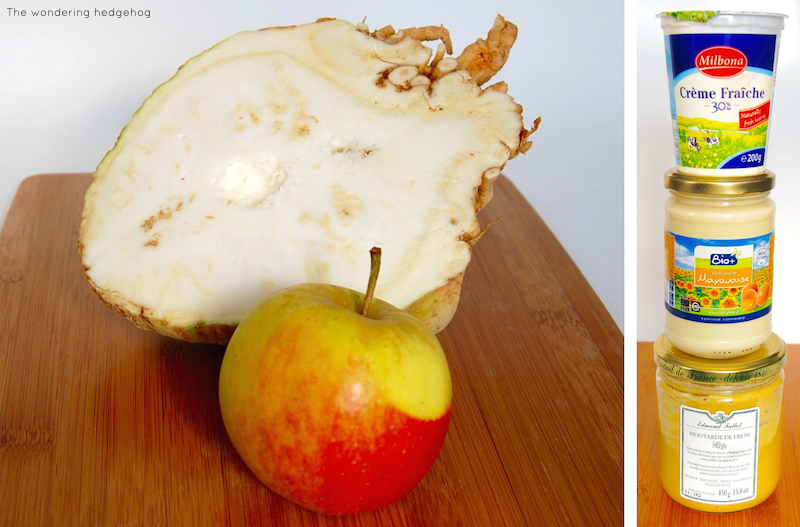

Celeriac remoulade (celery root salad)
Serves 4 as a side dish
Once the somewhat challenging task of peeling the celeriac is complete, the salad comes together very quickly.
The amount of dressing needed will ultimately depend on how much root is lost in the cleaning process. If you find the salad too dry, simply mix more dressing maintaining the 1:1 mayonnaise:crème fraîche ratio.

In a large bowl, prepare the dressing by mixing together:
  • ⅓ Cup mayonnaise
  • ⅓ Cup crème fraîche or sour cream
  • 1-2 Tablespoons Dijon mustard
  • ½ teaspoon kosher salt
  • ¼ teaspoon freshly ground black pepper
Set the dressing bowl aside while preparing the celeriac.
Wash:
  • 1 small celery root, 1 to 1½ lbs / 450 - 700 grams
  • 1 crisp eating apple (Braeburn, Granny Smith, Honeycrisp)
Using a sharp knife, carefully cut the celery root in half. This will expose all the hidden crevices and dirt. Carefully slice off the skin and any root tangles, until only the creamy white interior remains; cut out any tough, fibrous spots.
Grate the celeriac on the coarsest grater directly into the bowl with prepared dressing. Lightly mix to coat the celeriac with the dressing (this will prevent browning due to oxygenation).

Cut the apple into quarters, and remove the core. Grate the apple on the coarsest grater on top of the celeriac. Mix well to combine. Taste, adjust salt and pepper if needed, and serve.
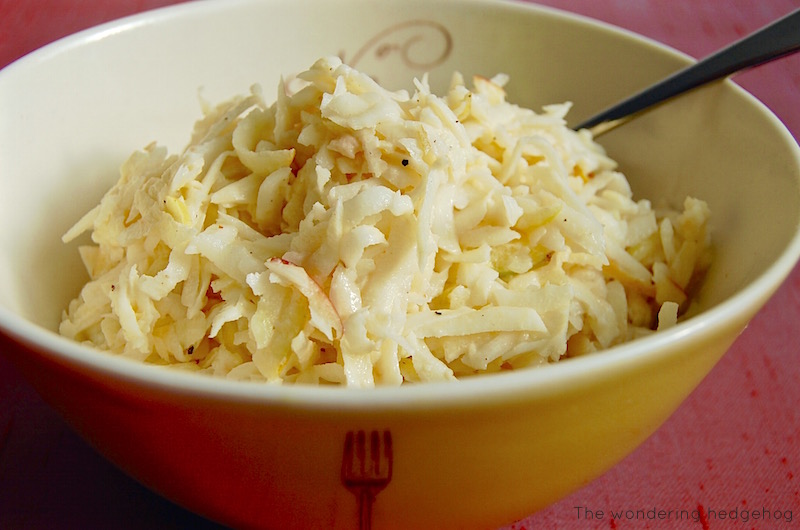
Celeriac's peak season is late fall and winter, making this recipe a perfect counterpoint to the heavy braises and roasts of the colder months.

February 21, 2016

Spicy cucumber salad

         They taste like burning!
                      ~ Ralph Wiggum, The Simpsons: Das Bus


A cucumber salad might seem like an odd choice for a winter recipe. Defense offers the following arguments: firstly, that the dressing offers enough heat ward off even a severe chill; secondly, as the forecast is oscillating between frostbite inducing -25°C/-13°F and a balmy +12°C/54°F, waiting a few days will likely produce cucumber salad-appropriate temperatures; thirdly, the salad is so delicious it will make you forget all about the weather.

I first encountered this dish at the Han Dynasty restaurant on New York's Upper West Side. Han's specializes in Sichuan dishes, and the salad is traditionally served as a cooling accompaniment to the fiery cuisine of the region. Despite my repeated entreaties, the restaurant declined to share the dressing's secret recipe. After spending some time testing various ingredient options and proportions, I have come up with something that, while not a perfect facsimile, makes a really tasty salad.

The dish offers a really great flavor balance. The cool crunch of the cucumber is offset by the spicy, pungent dressing. The acidity of vinegar is mitigated with a hint of sweetness, and sesame seed oil offers a hit of smokiness and marries the flavors together. The dressing is so good that any remainder is invariably eaten with spoon after all the cucumber slices are gone.

I don't dare call this Sichuan cucumber salad, since it lacks the traditional Sichuan peppercorns and Chinese black vinegar. Instead, the dressing uses ingredients that are likely already in your pantry (and are relatively easy to find), and can be used in a variety of other dishes. If you have Chinese black vinegar in stock, by all means use it instead, and omit the sugar.


Spicy cucumber salad
2 to 4 servings
  • 1 English hothouse or 2 slicing cucumbers (around 1 pound/500 grams)
  • 2 teaspoons regular table salt
If using regular slicing cucumbers, which tend to have tough skin, peel them. If using English hothouse cucumber, no need to peel. Cut each cucumber in half lengthwise, and scoop out the seeds with a small spoon.


Place the cucumbers cut side down on the cutting board, and whack with the flat side of the knife (the blade edge facing away, please). Do not hit so hard that the vegetables are pulverized, but use enough force to flatten the cucumber halves into long spears. Smashing increases the surface area, speeding up flavor absorption.
Slice the spears into half-inch (1cm) pieces.


Toss the cucumbers with salt, stir, and place in a colander set over a bowl to drain. Salting and straining firms up and seasons the cucumber flesh. Place in the refrigerator and leave for at least 15 minutes.


While the cucumbers are crisping up, prepare the dressing.

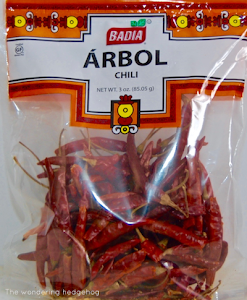
An important note on chili peppers. The dried arbol chilis in the photos have a spice rating of 10-30K Scoville heat units (SHUs), falling on the milder end of the spicy-heat spectrum. Cayenne peppers have a rating of 30-50K SHUs and bird's eye (Thai) chilis pack 100-20K SHUs. Since the Scoville rating is based on identical mass, it is possible to use a spicier pepper in the recipe by using less of it. Removing the ribs and seeds will reduce intensity of the pepper (the seeds are not spicy themselves, but are coated in capsaicinoids, the chemical compounds responsible for sensation of spice). If using a bird's eye chili, I would recommend starting with just one.

Dressing
  • 1 large or 2 small cloves garlic, peeled
  • 3 dried arbol chilis or 1 fresh cayenne pepper
  • 2 Tablespoons sesame oil
  • 2 Tablespoons rice vinegar
  • 2 teaspoons sugar
  • 1 teaspoon soy sauce


Finely mince or grate the garlic cloves.
If using dried chilies, break into large flakes, and discard the seeds. If using fresh pepper, wash and slice into thin rounds.

Place the sesame seed oil and chilis into a small saucepan and set over medium low heat. If the chilis start to brown, reduce the heat to low. Infuse, stirring occasionally, until small bubbles form around the edges of the pan and the chili pieces, 2-3 minutes. Remove from heat and stir in the garlic. After 30 seconds, the garlic should release its aroma but not change color.

Return the saucepan to heat and add the rice vinegar, sugar and soy sauce. Stir until the sugar is completely dissolved, another 30 seconds or so. Remove from heat and set aside to cool. The dressing should be a dark amber color, redolent of chilis and piquant with garlic.


Once the dressing cools to room temperature, assemble the salad. Combine the cucumbers and the dressing in a bowl; mix well, cover and refrigerate for 15 minutes. Stir well before serving.


The salad is an excellent accompaniment to almost any protein, especially heavier cuts such as ribs or pork belly. The spiciness of the dressing cuts through the fattiness of the meat, and the cool, crisp cucumber offers a pleasing palate cleanser. It would also be fantastic with grilled salmon or roast chicken.

The salad does not keep very well, as the cucumbers lose their crisp texture. It is possible to prepare extra dressing in advance and refrigerate it in an airtight glass jar for a few days. Remember, the garlic flavor will gain potency over time. Take the dressing out of the refrigerator to warm up while the cucumbers are straining.

Pantry note: While fresh chilis will look more attractive in the salad, it is expensive to buy 1 pepper at a time, and buying in bulk often produces one or two great dishes plus a bag of moldy chilis. It is more economical to buy a large package of dried chilis and keep it in the refrigerator. Arbol chilis, which offer moderate heat, work well in a variety of cuisines, and it is very easy to turn whole dried peppers into large flakes or chili powder, as needed.

March 26, 2015

Carrot-feta salad with tahini dressing

I'm trying to impress people here, Lisa. You don't win friends with salad.
~ Homer J. Simpson, The Simpsons: Lisa the Vegetarian

As an opportunistic omnivore, I eat almost everything. Joyfully, most foods turn out to be tasty, if not downright delicious. The list of foods I have disliked and would prefer to avoid in the future is mercifully short - sea cucumbers (childhood phobia plus a texture bias), boiled onions and boiled carrots. That last one seems particularly sad - the soggy texture, the washed-out color, the watered-down flavor. Bright orange, sweet and crunchy are the defining characteristics of carrots; it seems unjust to deprive them of their identity.

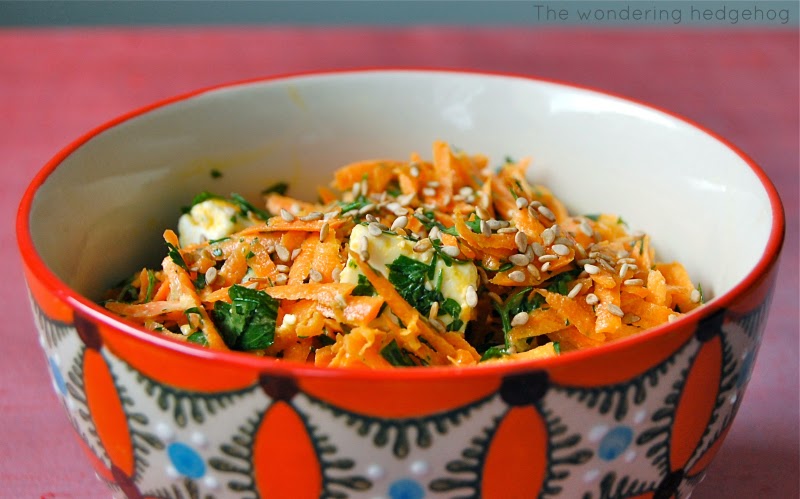
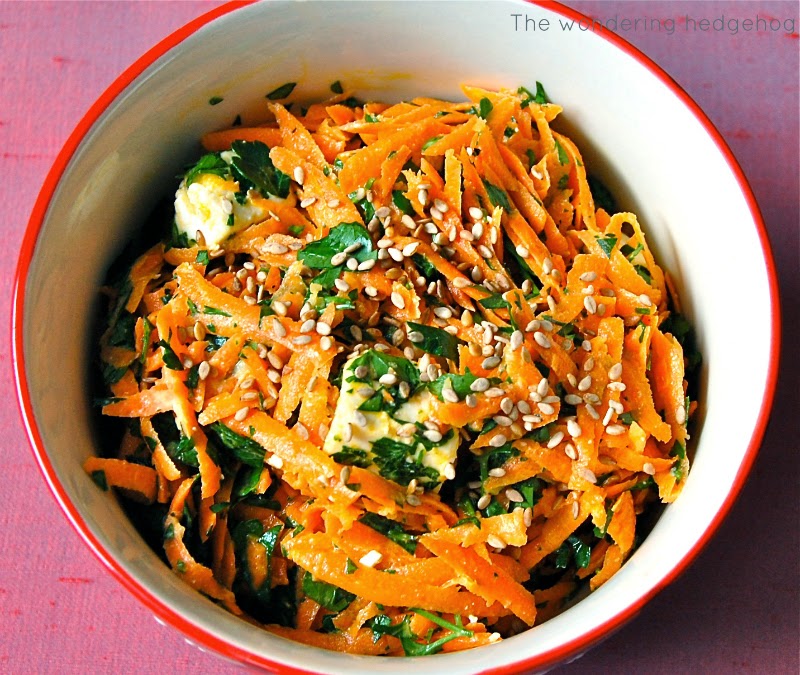
Thankfully, this salad both highlights and takes advantage of the carrot's natural talents. Bright in both color and flavor, it brings together the sweetness of carrots, the grassy sharpness of parsley and the briny tang of feta. The result is both good and good for you, full of vitamins and antioxidants, and studded with luscious cheese.

Serve with olives and some charcuterie as an appetizer, as a light side with meat or fish (perhaps omitting the feta), or by itself as a refreshing lunch. However it is presented, everybody goes for second helpings.

This salad is indebted1 to Deb Perelman's carrot salad with tahini and crisped chickpeas. After trying Deb's recipe, I found that I absolutely loved the zesty tahini dressing and the way it contrasted with the carrots. The roasted chickpeas and pistachios were not not my favorite elements - the carrots had enough texture on their own, and I found myself wandering in a different direction, a salty softness in place of spicy crunch.

Carrot-feta salad with tahini dressing
Serves 4-6
Do make more than you need. This dish is seriously addictive, and keeps very well in the refrigerator for several days.
Salad
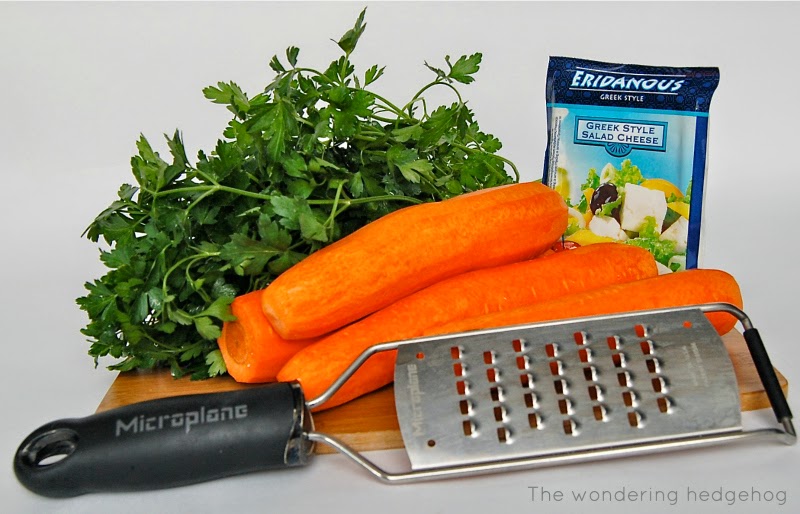
  • 1.5 pounds carrots (4-7, depending on size)
  • 1 large bunch of parsley (2-3 cups loosely packed leaves)
  • ½ pound feta cheese
Dressing
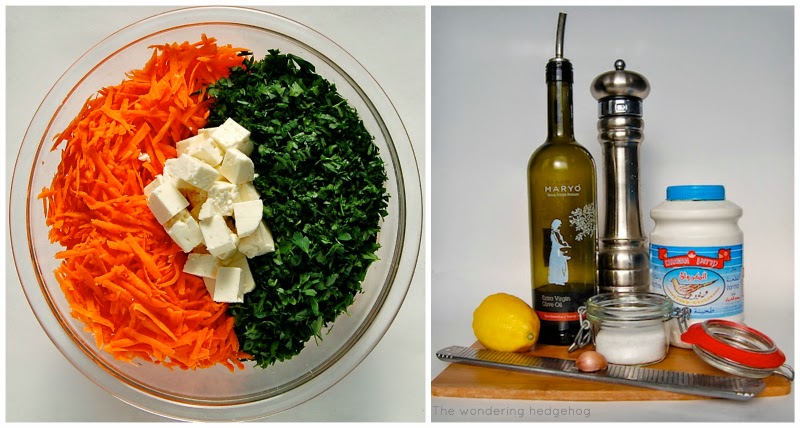
  • 2-3 Tablespoons fresh lemon juice (1 medium lemon)
  • 2 Tablespoons tahini
  • 2 Tablespoons olive oil
  • 1-2 Tablespoons water (bottled or boiled)
  • 1 clove garlic
  • 1 teaspoon kosher salt
  • freshly ground black pepper

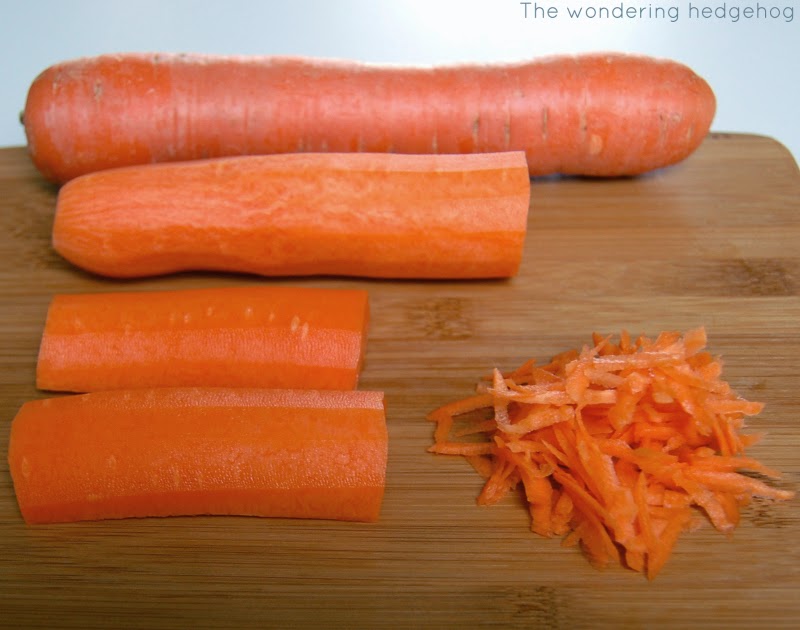
Peel and grate the carrots on the the large holes of the grater. A food processor shreds the carrots too finely to maintain the crunch; a little additional effort here makes a big difference.

Wash the parsley, shake off as much water as possible (or use a salad spinner) and remove the leaves from the stems. Roughly chop the leaves - they should be small enough to blend easily with the carrots but large enough to still have some texture.

Cube the feta cheese. If you are feeling particular, 1cm (¼ inch) cubes.

Prepare the dressing directly in a large bowl. Peel and finely mince the garlic. Add olive oil, salt and pepper.

Stir the tahini well before using. Tahini will separate over time, with solids sinking to the bottom and a layer of sesame oil forming on the top. Use a clean, dry utensil - tahini keeps practically forever, as long as it is not contaminated.

Roll the lemon on the counter before cutting and juicing to break the membranes and release more juice. If using a lemon directly from the refrigerator, microwave for 30 seconds before cutting. Juice the lemon into the the bowl (use a strainer or your fingers to catch the pips) and mix the dressing. Tahini will emulsify the dressing; add 1-2 Tablespoons of water to thin it out - it should pour easily.

Add the grated carrots, chopped parsley and cubed feta to the dressing; mix to combine. Taste and adjust the seasonings if necessary.

Serve sprinkled with toasted sesame seeds for an added crunch.

A quick ingredient note - the olive oil used in the dressing was a lovely gift from a thoughtful friend. The oil came from friends of the friend - a Greek couple who recently started a small business exporting artisanal olive oil (from a monastery, no less!). This oil is absolutely wonderful. It has a bright, grassy flavor without being bitter or overpowering. It is robust enough to stand up to sharp flavors like garlic and feta, and mild enough to dress delicate greens. I have been lucky enough to taste olive oils from some amazing producers all over the Mediterranean, and this is easily in my top three. I really recommend visiting Maryó's webstite and purchasing a bottle or two2.
1Ha! A terrible, unintentional pun.
2Sadly, this recommendation is not sponsored with additional bottles.

February 2, 2015

Lazy lentils

見栄えせず、
楽でおいしい。
試してね。
Not photogenic,
But easy and delicious.

Give lentils a try.
~ The hedgehog


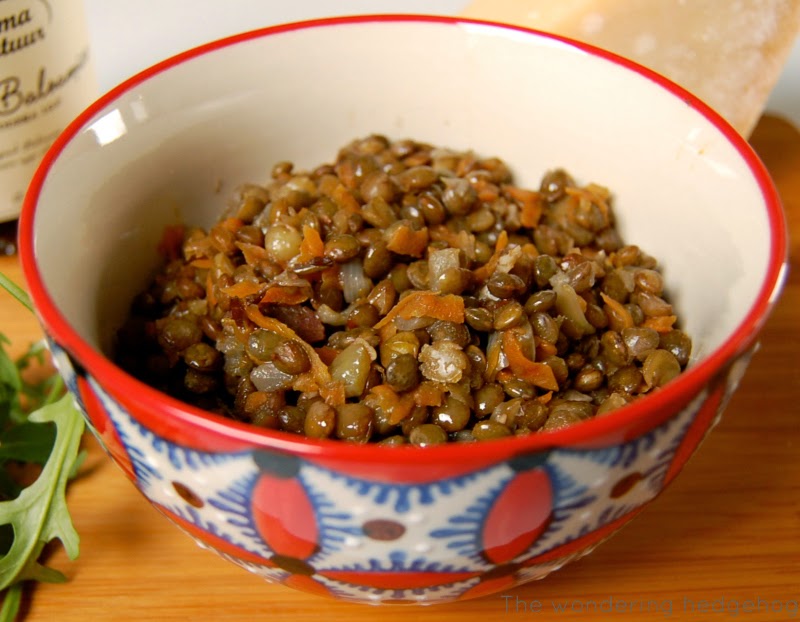
Sadly, cooked lentils do not make for the most attractive-looking dish. This is a shame, since lentils are easy to prepare, versatile and truly delicious. The preparation can be simple or elaborate and is flexible enough to be used for soups, stews, salads and side dishes.

The recipe uses a 1:3 lentils to water ratio, resulting in fairly moist lentils will some flavorful liquid in the bottom of the pot. Increasing the water ratio to 1:4 will produce a stew, and 1:5 will result in an excellent soup base. Reducing water to by half a cup will result in drier lentils perfect for salads 1.

A few peppercorns and a bay leaf lay the aromatics foundation; from here add what you wish. Parsley stems, a small bunch of thyme or a rosemary sprig will all result in a more complex flavor.


Lazy lentils
Serves 4 as a main dish or 6 as a side
  • 3 Cups cold water
  • 1 Cup green or brown lentils, picked over for rocks
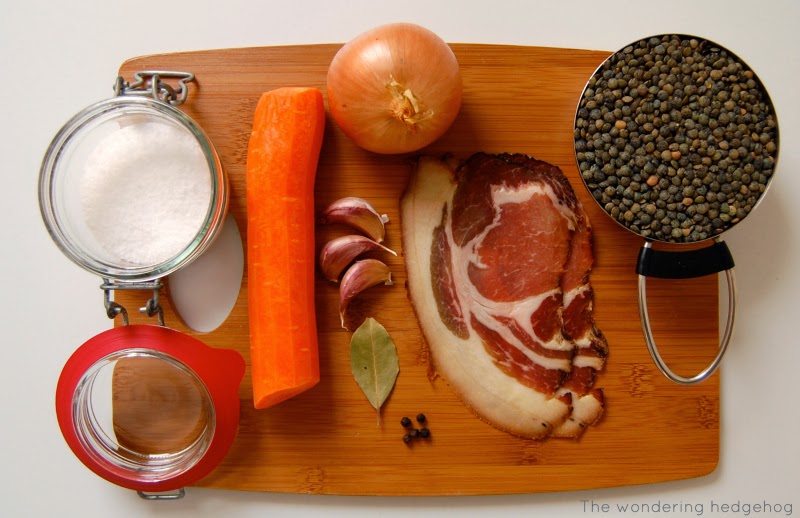
  • 1-2 pieces of bacon, rashers, speck, pancetta or speck 2
  • 1 onion
  • 1 carrot
  • 3 cloves of garlic
  • 5 peppercorns
  • 1 bay leaf
  • Salt to taste
Fast and tasty
Rinse the lentils in cool water. Peel the onion, carrot and garlic, cut each one in half. Combine with the remaining ingredients in a pot and bring to a boil over medium heat. Lower heat to a simmer and cook until lentils are tender (start checking 20 minutes after boil is reached). Taste and adjust seasoning if needed.

10 minutes longer, much more delicious
Finely chopping the vegetables, briefly cooking the bacon to render out the fat and using it to sauté the onions has a dramatic impact on flavor, well worth the few additional minutes of work.

Rinse the lentils in cool water, add water to cover and leave to soak while prepping the rest. Peel the onion, carrot and garlic.
Heat a splash of oil in the pot over medium heat. Add the bacon, and brown slightly on both sides.
 
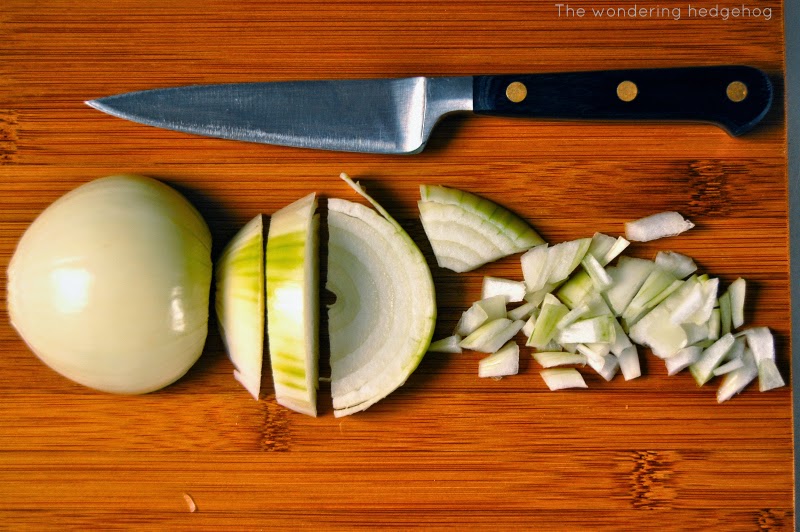
While bacon is cooking, cut the onions. Slicing the onion in half pole-to-pole, then cutting each half into semicircles and finally chopping each one allows for easy control over size of the dice without struggling with a wobbling onion. The thinner the half-disk and smaller the cut, the finer the dice.


Grate the carrots.


Add the chopped onion, bay leaf, peppercorns (and any other aromatics) and a pinch of salt to the browned bacon. Cook, stirring occasionally, until onion is softened and translucent, about 5 minutes.
Slice the garlic into large slivers. Add to the pot, stir, and cook until fragrant, another minute or 2.
Add the grated carrots, drained lentils and water, stir. Bring to a boil over medium heat. Lower heat to a simmer and cook until lentils are tender (start checking 20 minutes after boil is reached). Taste and adjust the seasoning if needed.
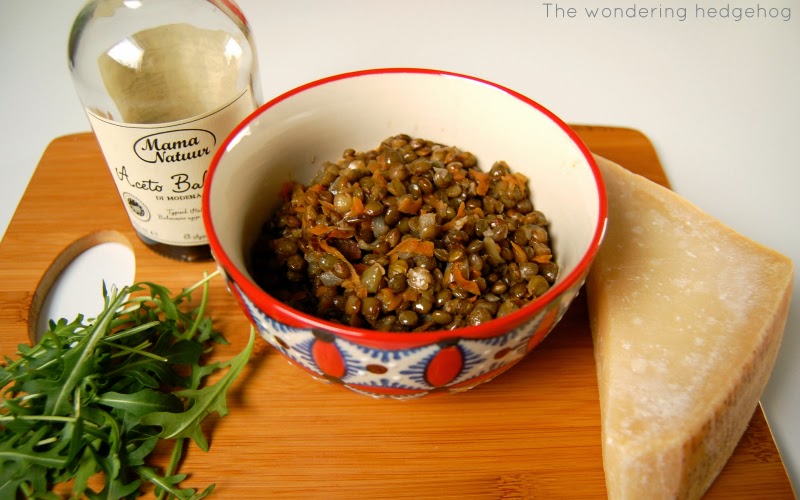
Lentils love acidity, so stir a splash of balsamic vinegar into each bowl before serving, or add 2 or 3 Tablespoons to the entire pot once it's off the heat.
 

For an even more substantial meal, grate Parmigiano Reggiano 3 over the lentils before serving.

Quick soup
Increase the water to 5 cups, and follow the more complex recipe. Once the lentils are cooked, stir in a handful or two of washed spinach or arugula leaves. The residual heat will wilt the leaves and preserve the green color.

All variations of this recipe can easily be made with most other pulses - chickpeas, pinto beans, black eye peas, etc. If using dried legumes other than lentils, soak them overnight first, and increase the cooking time. Start checking the beans after 40 minutes. Simply squeeze a bean between thumb and forefinger. If it smashes with little pressure, it's done.


1For this preparation, slice the onion and carrot in half and keep the garlic cloves whole for easy extraction after cooking.
2Continental Europe, the UK and US have confusing differences in cured pork product nomenclature. The photos show Dutch bacon, or what would be referred to in the UK as rashers, and does not exist in the US. The closest American equivalent is Canadian bacon, sadly lacking all-important flavor component of fat. American bacon, on the other hand, is known as streaky rashers in the UK, and speck in Netherlands and the rest of Continental Europe. Pancetta, which can be rolled or flat, is never smoked, American bacon almost always is. UK rashers come in both smoked and non-smoked varieties. A visual guide to this all-important food will be coming soon.
3Never throw out leftover Parmegiano Reggiano rind. Freeze it in a Ziplock bag, and add it to soups and stews (including this recipe) for a major umami boost.